“I have always imagined that Paradise will be a kind of library.” — Jorge Luis Borges
Over the past year, I have amassed a collection of over a hundred books, both physical and digital, driven at first by a sudden, burning resolve to gather as many as I could find.
Among them was a notable set of seven books, each one insightful and engaging, their pages brimming with wisdom that many might overlook. This pursuit was not born out of mere obsession but from a deeper, more urgent calling: the need to rescue important and discarded knowledge in certain areas around the world.
I have watched for years as books, some profound, some not, were burnt, abandoned, or treated with indifference. As a lifelong bibliophile, this disregard for written wisdom ignited in me a mission: to collect, preserve, and eventually house these works in libraries I plan to establish. These libraries will not merely store books; they will resurrect them, offering exposure to ideas that might otherwise fade into obscurity. This is not to set aside the work several other individuals and societies have contributed to the same purpose.
Initially, my collection had no specific focus, but over time, it has crystallised around works that are truthful, insightful, and spiritually enriching. The world is filled with more revolutionary, beautifully written, and intellectually diverse books than will ever reach mainstream attention, hidden in drawers, buried in thrift stores, or left to decay in neglect. Although it is not to deviate from the fact that deceitful books are not deserving of this treatment, yes, they are. My mission is to ensure that at least some of these useful voices endure.
In an era dominated by fleeting digital content, books remain timeless vessels of knowledge. They demand patience, attention, deep thought, and engagement; these qualities are often lost in the rapid consumption of online media.
Writer Neil Pollin, in one of their works called, The Enduring Legacy of Book Reading: A Journey Through Time, supports my stance by stating that ‘Despite the rise of alternative forms of media, the printed word remains a cornerstone of human expression and communication.’
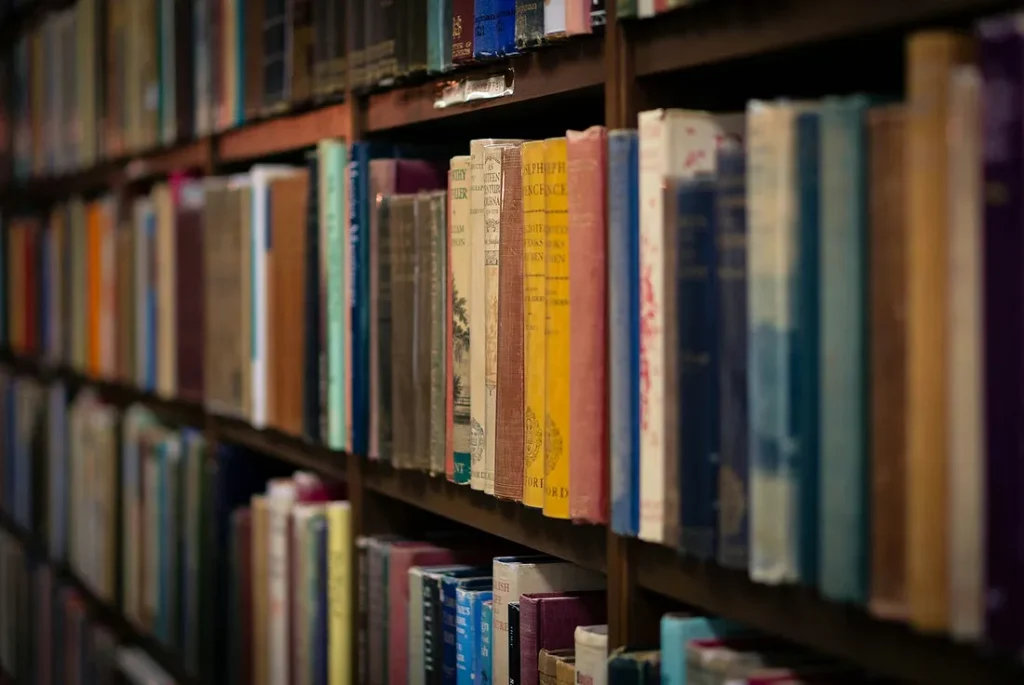
Yet, from my observation, their importance is twofold: they preserve the past while offering a counterbalance or perspective to the misinformation that floods modern discourse.
However, not all books are equal. Just as there are works of profound truth, there are also those that spread falsehoods, propaganda, or shallow ideas.
The obvious responsibility of a collector and a reader is to discern, to separate wisdom from deception and illogicality. This, my friend, is and has become a difficult task in contemporary times. This is why my focus has sharpened toward books that challenge, enlighten, and endure.
As a writer, this endeavour does more than, of course, expand my personal library; it refines my thinking, enriches my writing, and deepens my understanding of history while it also serves the general public. Many narratives have been distorted or erased; by rescuing these texts, I hope to contribute to a revival of authentic and logical knowledge.
It is very common knowledge that books are more than paper and ink; they are a unique technology for thoughts. The linear, deep engagement they demand fosters critical thinking and complex understanding in a way I believe that digital media cannot replicate.
Arinze, a long-time friend of mine who is really enthusiastic about books, said to me during one of our numerous meetings that the preservation of books and several other meaningful writings is the preservation of a fundamental mode of human cognition and a bulwark against the erosion of collective memory.
Books serve as external memory systems; without them, sizable human knowledge depends on fallible human recall and oral transmission, which, over time, due to errors of man, has caused the human memory to be unreliable and produce distorted information over generations. Despite this distortion and disappearance of information, the essential purpose books serve as cannot be set aside
Speaking of the erosion of collective memory. Bear in mind that enemies of humanity and the ignorant, through their activities, have a strong grip on every aspect of human activities, not excluding books and writings. This grip is often wielded in such a way that it has become detrimental to man; that being said, discernment, guidance and logical reasoning are essential tools one must put to work when a book is picked up to be digested. This ensures we have access to the logical long-form reasoning necessary to build upon the past rather than repeat its errors.
Books are more than paper and ink; they are the foundational infrastructure of civilisation. They are our collective memory, storing knowledge across generations in a stable, sovereign format. My opinion is that preserving them is not nostalgia; it is a vital act of maintaining intellectual independence and ensuring that one of the cornerstones of dialogue to humankind remains accessible, verifiable, and free from digital decay or manipulation. My observation has for long always pointed to the fact that the digital aspect of this plays a complementary role
While this does not sum up the entirety of my mission, I hope it provides a clear foundation. I look forward to sharing the next part of this exploration with keen readers.
Leave a Reply